Beginner Flower Farm Business: The Case for Starting Small & Simple
Beginner Flower Farm Business: The Case For Starting Small and Simple
A realistic & true beginning:
Everyone asks, “How much can I make selling cut flowers?” The honest answer: it depends on your garden size, your willingness to work, and your ability to get blooms into people’s hands. That’s why I make the case for starting small with a simple, cut-and-come-again garden and one easy way to sell so you can learn fast, build momentum, and expand with confidence.
The Problem with Going Big Too Soon
When you plant 100 of everything before you’ve sold a single bouquet, you inherit the costs, time, money, and stress…without the skills or markets to match. Beginners often chase infrastructure (raised beds, landscape fabric, irrigation) and forget the goal: steady flowers sold to real people.
Takeaway: Big inputs don’t equal big profits. Learn skills + simple systems first.
Argument 1: Small Gardens Teach Faster (and Cheaper)
Your first year is school. You’re learning pinching, harvest timing, succession planting, and how different varieties behave. I recommend the easiest cut flower garden of all… A cut-and-come-again garden gives you constant feedback: harvest, observe, adjust, repeat without burning cash on complex setups. You literally just need a spot of dirt - nothing fancy, straight rows - so maintenance is easy with a hoe. We’re keeping your costs low.
Takeaway: Start with a garden that teaches you, my list of cut-and-come-again annuals “reset” after each cut, so you learn from their natural tendency to repeat bloom.

Argument 2: Cut-and-Come-Again = Consistent Product
With cut-and-come-again varieties, each plant is a producer, not a one-and-done. That means reliable, repeatable harvests that let you show up for customers week after week. They will teach you about regular harvesting and what is possible. The more you harvest, the more they produce.
Takeaway: Consistency sells. These varieties continue to bloom until frost and are powerful producers in every good cut flower garden.
Argument 3: Simple Sales Channels Build Confidence
A driveway pop-up or farm stand (weekly, bi-weekly, or “every other day”) is the easiest launchpad. You get to stay home, your neighbors find you, and your friends/family can support you. Pair it with a few Facebook posts, and you’ll start selling your flowers and learning what sells.
Takeaway: Make it easy to buy from you before you try to sell everywhere. You’ll learn a lot about customers and customer fulfillment… It will grow from there.

Argument 4: Market Reality vs Hypotheticals
“How much can I make?” depends on you, your effort, your planting plan, and your follow-through. Starting small with cut-n-come-again flowers means you get to test your market with low risk, discover price points, and learn how many stems you need to meet demand. You take notes throughout the season, and each year you adjust.
Takeaway: Replace “what if” with “what happened.” Let small data guide big decisions.
Argument 5: Skill Compounds Into Profit (Design is the Multiplier)
You’ll make the most per stem when you design and when your blooms last. Both require practice, including color, proportion, mechanics, and post-harvest care. A small, steady garden gives you the reps to develop a designer’s eye and a florist’s standards.
Takeaway: Use Year 1 to sharpen high-value skills that raise your price, not your workload. And I promise you… These cut-and-come-again flowers create gorgeous flower arrangements.

Argument 6: Smart Setup Beats Fancy Infrastructure
You don’t need raised beds, landscape fabric, or a fancy irrigation system to begin. Start with short in-ground rows, a hoe for weed control, and a mix of direct-seeded + home-started seedlings. Add tools only when the bottleneck proves it and you know what matters to you.
Takeaway: Buy gear to solve problems you actually have, after you’ve met them, and you’ll hold onto money earned and build a business that is profitable from year one.
Argument 7: A Starter List That Unlocks the Next Stage
A well-chosen beginner lineup gives you variety (not just a pile of cosmos) and teaches the strategies you’ll use forever: pinching vs. not, succession timing, harvest cadence, and bouquet-building. This starter list also transitions beautifully into your eventual, perfect all-season cut flower garden later.
Pro Tip & Big Takeaway: Your first garden isn’t wasted; it becomes a pillar inside your future, advanced cut flower garden.
Quick Start: Your First-Year Playbook
Plant: 15–20 of the cut-and-come-again annuals (mix of direct-seed seed straight into the ground + home-started (small seedlings you start indoors for early blooms).
Process: Pinch most, don’t pinch others—observe the difference.
Care: Hoe between rows weekly, keeping it simple and inexpensive.
Harvest rhythm: Set 1, 2, 3 fixed harvest days to train yourself, your garden, and your buyers.
Sell: One easy channel (driveway stand or popup), boosted by simple Facebook posts.
Track: What sold, what lingered, vase life, stem count per variety.
Q&A: “But What About…?”
Q: What if my bouquets don’t sell at first?
A: That’s normal. You’re building awareness. Keep showing up, invite neighbors, post pick-up times, and adjust price/variety based on feedback.
Q: Do I need to pinch everything?
A: No… but I would pinch most everything. (I personally am a HUGE pincher!!) You want to leave a few unpinched so that you see how that affects your strategy. Note how pinching changes stem length, bloom time, and branching—and how it affects your harvest schedule throughout the season.
Q: When should I scale?
A: Look at the season overall… are you beginning to have regulars and are selling out consistently for a few weeks? Scaling will involve more succession plantings and seeding next year to extend your season by starting earlier and going later, not just increasing plant count.
Start Small, Start Learning, Begin Selling
Check Out My Inexpensive Cut-N-Come-Again Beginner Course to start simply with confidence.
👉 Check out the Full Course for Beginners
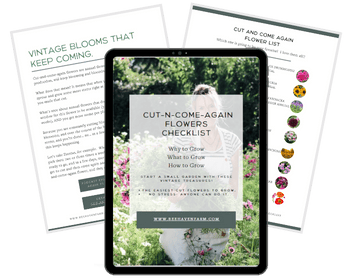
👉 Get the Beginner Cut-and-Come-Again List & Guide for Free